Knight Names: 100 Noble & Honorable Ideas for Fantasy
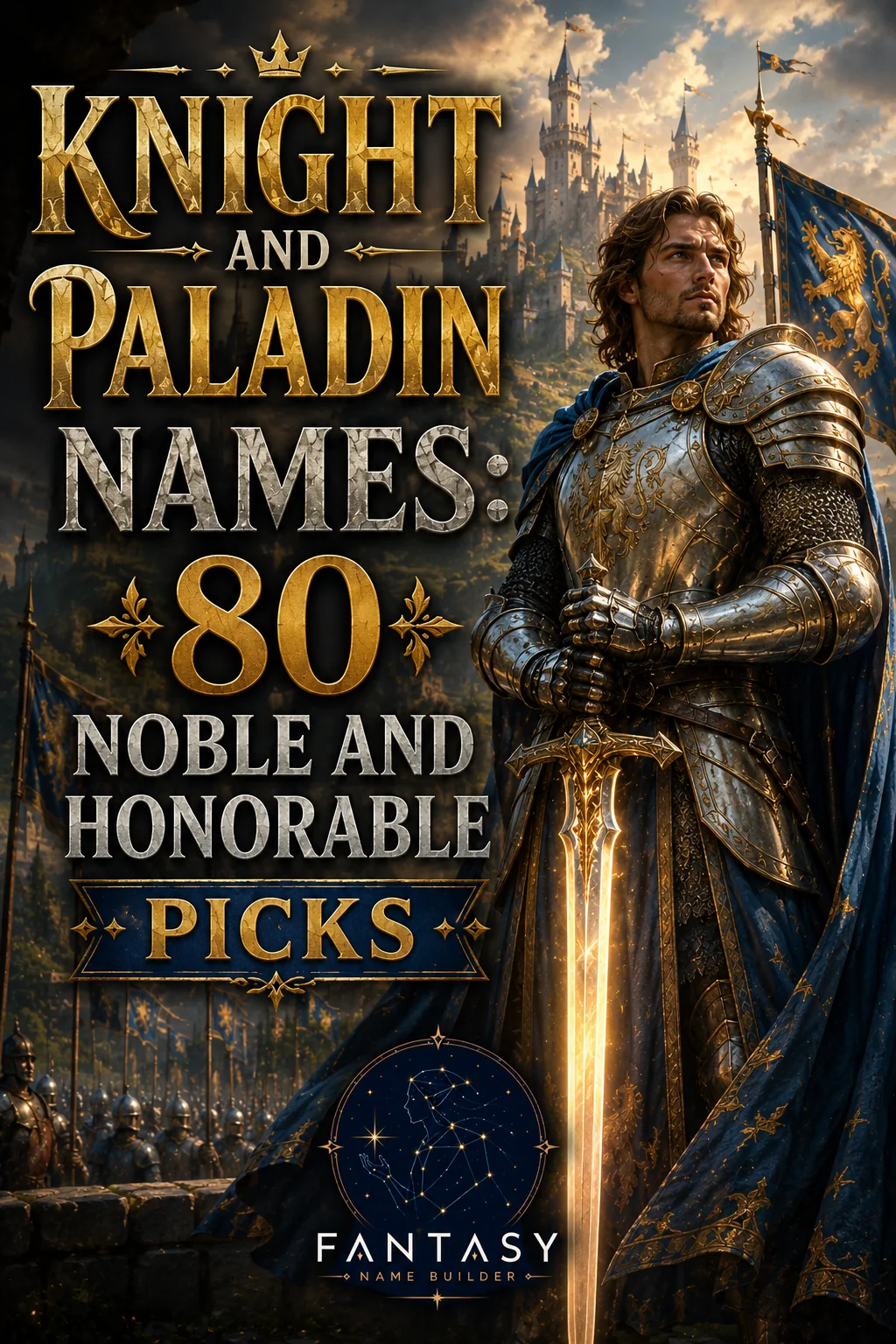
A knight's name should ring with chivalry — noble, honorable, and dignified, carrying the weight of an oath, a coat of arms, and a code worth dying for. Knights are the armored champions of fantasy: sworn warriors of a lord or realm, bound by honor, courtesy, and courage, who joust at tournaments and charge into battle for king and country. Their names need that gallant, medieval quality — strong but refined, often with an Old French, English, or Germanic ring, the kind of name that sounds right before "Sir" or after a noble house. Where a barbarian's name is wild, a knight's name is courtly — proud, polished, and steeped in tradition.
What sets knight names apart is the nobility and chivalry. A knight isn't just a fighter — they're a gentleman (or lady) of war, bound by vows and reputation, often of noble blood. So the name should sound gallant and dignified, and it pairs perfectly with the honorific "Sir" or "Dame," a noble house name, and a chivalrous epithet (the Brave, the True, the Gallant).
Below are 100 knight names — noble and honorable — for male and female knights, plus titles and house names, and a quick how-to. Whether you're rolling up a D&D knight, writing a champion of the realm, or naming a tournament hero, there's a gallant name here. Tips at the end.
Noble & gallant male knight names
Strong, refined, and chivalrous — these suit sworn knights, champions, and gallant defenders of the realm:
| Name | Vibe | Best for |
|---|---|---|
| Tristan | Heroic, classic | Errant knight |
| Lancelot | Legendary, gallant | Champion |
| Gareth | Noble, steady | Loyal knight |
| Roland | Brave, legendary | Hero-knight |
| Cedric | Dignified, firm | House knight |
| Percival | Pure, questing | Grail-knight type |
| Aldous | Old-noble | Veteran knight |
| Bedivere | Loyal, true | Faithful champion |
| Godfrey | Pious, strong | Crusader-knight |
| Edmund | Noble-protector | Sworn defender |
| Galen | Calm, noble | Honorable duelist |
| Reginald | Kingly, proud | Tournament champion |
Tristan, Lancelot, and Percival are pure Arthurian chivalry — drawn straight from legend, they carry instant knightly nobility. Roland (the legendary hero-knight of medieval epic) and Bedivere (the loyal knight) bring that same gallant, storied weight, perfect for a champion of the realm.
Noble & gallant female knight names
Equally noble and gallant — these fit lady-knights, champions, and sworn warrior-women of honor:
| Name | Vibe | Best for |
|---|---|---|
| Brienne | Strong, honorable | Sworn protector |
| Isolde | Noble, devoted | Questing knight |
| Guinevere | Regal, gallant | Champion |
| Eleanor | Dignified, firm | House knight |
| Rowena | Noble, proud | Tournament champion |
| Aveline | Pure, brave | Errant knight |
| Cordelia | Loyal, true | Faithful defender |
| Mathilde | Mighty-battle | Warrior-noble |
| Seraphine | Radiant, noble | Holy knight |
| Beatrix | Bold, gallant | Duelist |
| Lyonette | Lion-hearted | Brave champion |
| Adelaide | Noble, kind | Realm-defender |
Brienne, Guinevere, and Mathilde sound exactly like lady-knights — noble, strong, and bound by honor. Brienne especially carries that sworn-protector gravitas (loyal, formidable, true to her word), while Lyonette ("lion-hearted") and Mathilde ("mighty in battle") wear their courage in the name.
Knight titles, honorifics & epithets
Chivalry runs on titles — the honorific "Sir" or "Dame," plus a chivalrous epithet earned through valor:
Sir, Dame, the Brave, the True, the Gallant, the Bold, the Valiant, the Just, the Lionheart, the Steadfast, Defender of [realm], the Honorable, Champion of the Crown, the Undefeated, Knight of the [order].
A title and epithet complete a knight: Sir Tristan the Brave, Dame Brienne the True, Sir Roland, Champion of the Crown. Knights live by honor and reputation, so the "Sir/Dame" honorific plus a chivalrous epithet earned in tournament or battle is essential to a proper knight's name.
Knightly house & order names
A knight is often known by their noble house or the order they serve — these add heraldic weight:
House Valemont, of Thornwall, the Order of the Silver Lion, House Greycastle, of Ashford, the Order of the Dawn, House Ravenscroft, of Highmoor, the Knights of the Rose, House Marbrand, of Stormkeep, the Order of the Dragon, House Blackthorn, of Westvale, the Crimson Order, House Lothric, of Carthmoor, the Order of the Oath, House Ferran, the Iron Knights.
A house or order name frames a knight in heraldry and allegiance: Sir Cedric of Thornwall, Dame Eleanor of House Valemont, Roland, Knight of the Silver Lion. The house tells you their bloodline and lands; the order tells you their sworn brotherhood and cause.
How to name your knight
Nobility, chivalry, and medieval dignity:
- Borrow from chivalric legend. Tristan, Lancelot, Percival, Guinevere, Roland — Arthurian and medieval-epic names carry instant knightly weight.
- Lean Old French, English, or Germanic. Cedric, Reginald, Mathilde, Godfrey — these languages give knight names their authentic gallant, medieval ring.
- Add "Sir" or "Dame" and an epithet. "Sir Tristan the Brave," "Dame Brienne the True" — the honorific and a chivalrous epithet are core to a knight's identity.
- Tie them to a house or order. "of Thornwall," "Knight of the Silver Lion" — a noble house or sworn order frames the knight in heraldry and allegiance.
- Keep it dignified. Knights are bound by honor and courtesy — the name should sound noble, proud, and refined, never crude or sneaky.
A great knight name should sound like it belongs on a banner and in a ballad — noble, gallant, and bound by an unbreakable oath, the name of someone who'd uphold their honor even at the cost of their life. Lean into the chivalric legends and medieval languages, add "Sir" or "Dame" and a proud epithet, tie it to a house or order, and your knight will feel every inch the honorable champion of the realm they are.
Match the name to the knight's order and oath
What gives a knight depth — and what their name can frame — is the order they serve and the oath they keep. Knighthood is built on allegiance and a code, and different knights embody it differently. The classic is the gallant champion — the noble, courteous knight-errant who quests, jousts, and defends the innocent, embodying chivalry at its most idealistic, suiting a legendary name (Tristan, Lancelot, Guinevere) and a virtuous epithet (the Brave, the Gallant). The name should sound like a hero from a ballad. Then there's the sworn house-knight — bound in service to a noble family or lord, loyal and dutiful, fitting a dignified name (Cedric, Eleanor, Gareth) tied to a house (of Thornwall, House Valemont).
There's also the holy or crusader knight — sworn to a faith or sacred order as much as a crown, suiting a pious name (Godfrey, Seraphine) and an order (the Order of the Dawn) — these overlap with paladins. And there's the grim or oathbound knight — the weathered veteran or grimly dutiful warrior who keeps their vow no matter the cost, fitting a sterner name (Aldous, Edmund) and a hard epithet (the Steadfast, the Undefeated). Don't forget the fallen or disgraced knight either — one who broke their oath or lost their honor and seeks to reclaim it, a rich, tragic archetype. Deciding which order your knight serves and which oath they keep — gallant questing, house loyalty, holy crusade, or grim duty — instantly tells you how legendary, how dignified, or how stern the name should be. Pick the order, add the honorific and a house, and your knight will feel like a true champion bound by honor rather than a generic guy in armor.
Frequently Asked Questions
What are good knight names?
Great knight names include Tristan, Lancelot, and Roland for men, and Brienne, Guinevere, and Mathilde for women — noble, gallant, chivalrous names drawn largely from Arthurian and medieval legend. Add "Sir" or "Dame," a chivalrous epithet like "the Brave," and a house or order for a complete knight's name.
What are good female knight names?
Female knight names include Brienne, Guinevere, Isolde, Mathilde, Lyonette, and Eleanor — noble, strong, and bound by honor. Brienne carries sworn-protector gravitas, while Lyonette ("lion-hearted") and Mathilde ("mighty in battle") wear their courage in the name. Pair with "Dame" and an epithet like "the True."
How do I make up a knight name?
Borrow from chivalric legend (Tristan, Percival, Guinevere), lean Old French, English, or Germanic (Cedric, Reginald, Mathilde), and add "Sir" or "Dame" plus a chivalrous epithet ("the Brave," "the Just"). Tie the knight to a noble house or order ("of Thornwall," "Knight of the Silver Lion") and keep the name dignified.
What are good knight titles and epithets?
Knight titles include the honorifics "Sir" and "Dame," plus epithets like "the Brave," "the True," "the Gallant," "the Valiant," "the Lionheart," and "Champion of the Crown." Stack them onto the name (Sir Tristan the Brave, Dame Brienne the True) — knights live by honor and reputation, so the title is essential.
What are good knightly house or order names?
Knightly house names include House Valemont, of Thornwall, House Greycastle, and House Ravenscroft; orders include the Order of the Silver Lion, the Knights of the Rose, and the Order of the Dawn. Frame the knight with one (Sir Cedric of Thornwall, Knight of the Silver Lion) for heraldic weight and clear allegiance.
What's the difference between a knight and a paladin name?
Knight names are noble, chivalrous, and medieval (Tristan, Brienne), bound to a lord, house, or secular code of honor, with "Sir/Dame" honorifics. Paladin names carry a holy, sacred shine (Cedric, Seraphina, Gabriel), bound to a god or divine oath. A knight name sounds courtly and gallant; a paladin name sounds blessed and righteous — though a holy knight can be both.
🔗 More Fantasy Name Guides You'll Love
Go name your knight
Gallant Sir Tristan, honorable Dame Brienne, legendary Sir Lancelot, or a tournament champion like Reginald the Bold — there's a noble, chivalrous name here for your knight, proud and gallant and bound by an unbreakable oath.
👉 Open the free Fantasy Name Builder to dub one by vibe — gallant, noble, or grim, in a click, no signup. ⚔️
Which one belonged on a banner? That's your knight. Now send them to the tournament — or the war.