D&D Character Names for Kids and Family Game Night
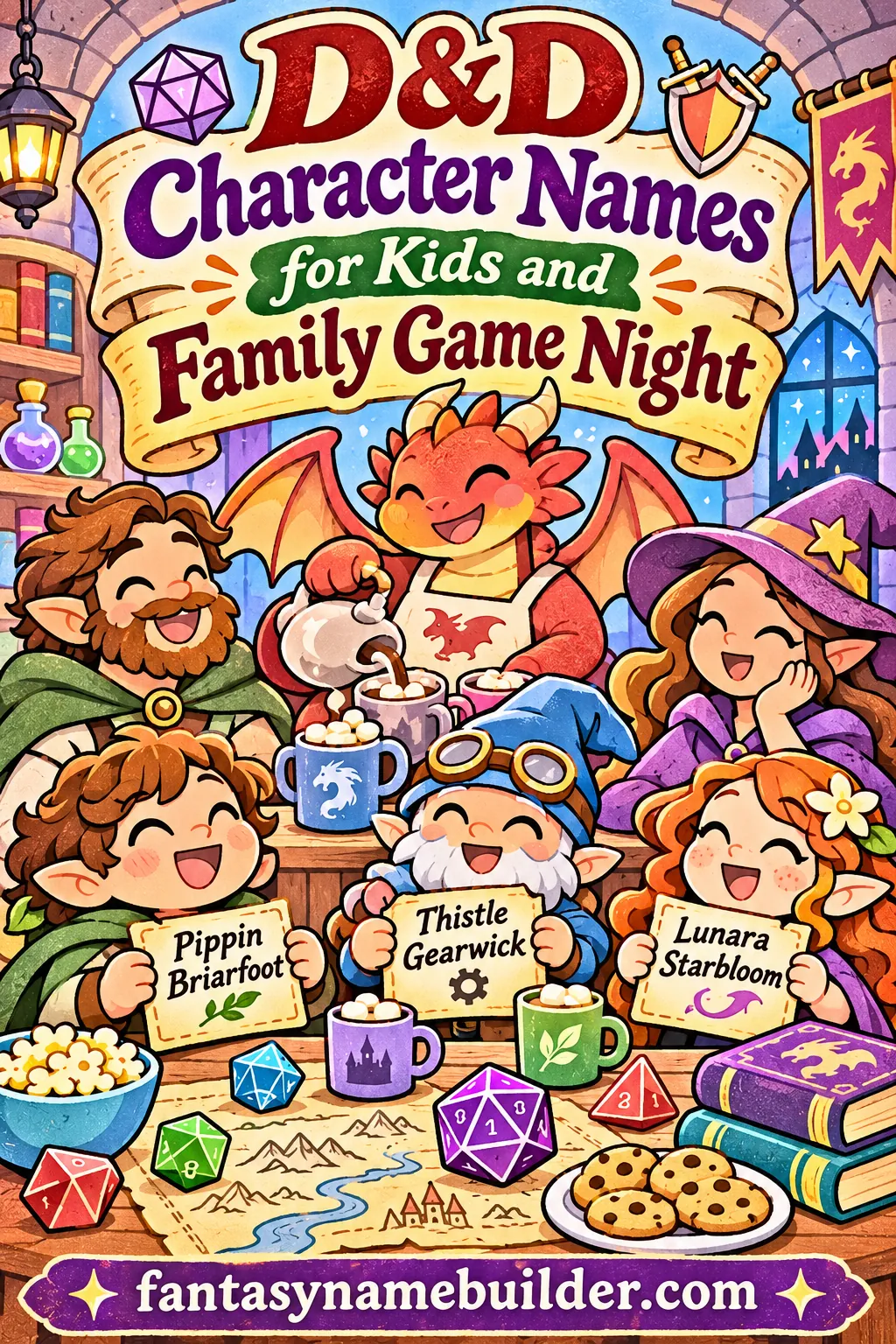
The best D&D character names for kids are short, cheerful and spelled the way they sound, like Pip Muddlefoot, Tilly Sprocket or Bram Stoneboots, so every child can say their hero's name out loud and write it on their sheet in seconds. Halfling and gnome names are the easiest place to start because they're naturally playful, and kids love them on sight.
The free Fantasy Name Generator on our homepage makes it even quicker. Pick Halfling or Gnome, set length to Short, tap Generate, and let each child choose a favorite from the list. Below you'll find 200+ kid-friendly D&D names sorted by race and personality, a 10-minute naming plan for game night, settings for the generator, and fixes for the little hiccups that come up when kids name their first heroes.
⚔️ Pick a name from this list
Tap Next for a name from this page, and save the ones you love.
Why Kids Need Easy D&D Names
A first family game of Dungeons & Dragons is exciting, and a little chaotic. Kids want to start rolling dice, not spend twenty minutes stuck on a name. A simple name keeps the energy up and gets everyone to the fun part faster.
Easy names help in a bunch of small ways:
Kids can say them. If a seven-year-old can't pronounce their character's name, they'll stop using it. Then you get "my guy" for the rest of the night, which isn't nearly as fun.
Kids can spell them. Younger players often write their own name on the character sheet. A name like Pip or Bram goes down in seconds. A name with apostrophes and silent letters turns into a spelling test.
Everyone can remember them. At a family table, the grown-up running the game (the Dungeon Master, or DM) has to track every hero. So do siblings, cousins and grandparents. Short names stick.
They make kids feel like heroes. A name that sounds brave, funny or magical gives a child something to play. Tilly Sprocket the tinkerer practically tells a kid what to do next.
They keep the game moving. In a one-shot (a single-session adventure), every minute counts. Fast names mean more time for goblins, treasure and dragons.
Here's a simple test to run on any name before a child writes it down:
| Test | Ask this | Good sign |
|---|---|---|
| Say it | Can the child say it three times fast? | Yes, and they're giggling |
| Spell it | Can they write it without help? | Mostly, with maybe one letter fixed |
| Remember it | Can a sibling repeat it five minutes later? | Yes, without peeking |
| Picture it | Does the name hint at who the hero is? | Stoneboots sounds sturdy, Sprocket sounds clever |
| Like it | Does the child smile when they hear it? | That's the most important one |
200+ D&D Character Names for Kids
All of these names are original, short and simple to sound out. Most are one or two syllables per part, with no apostrophes or tricky letter combinations. You can use a first name alone or pair it with a fun last name.
Halfling Names for Kids
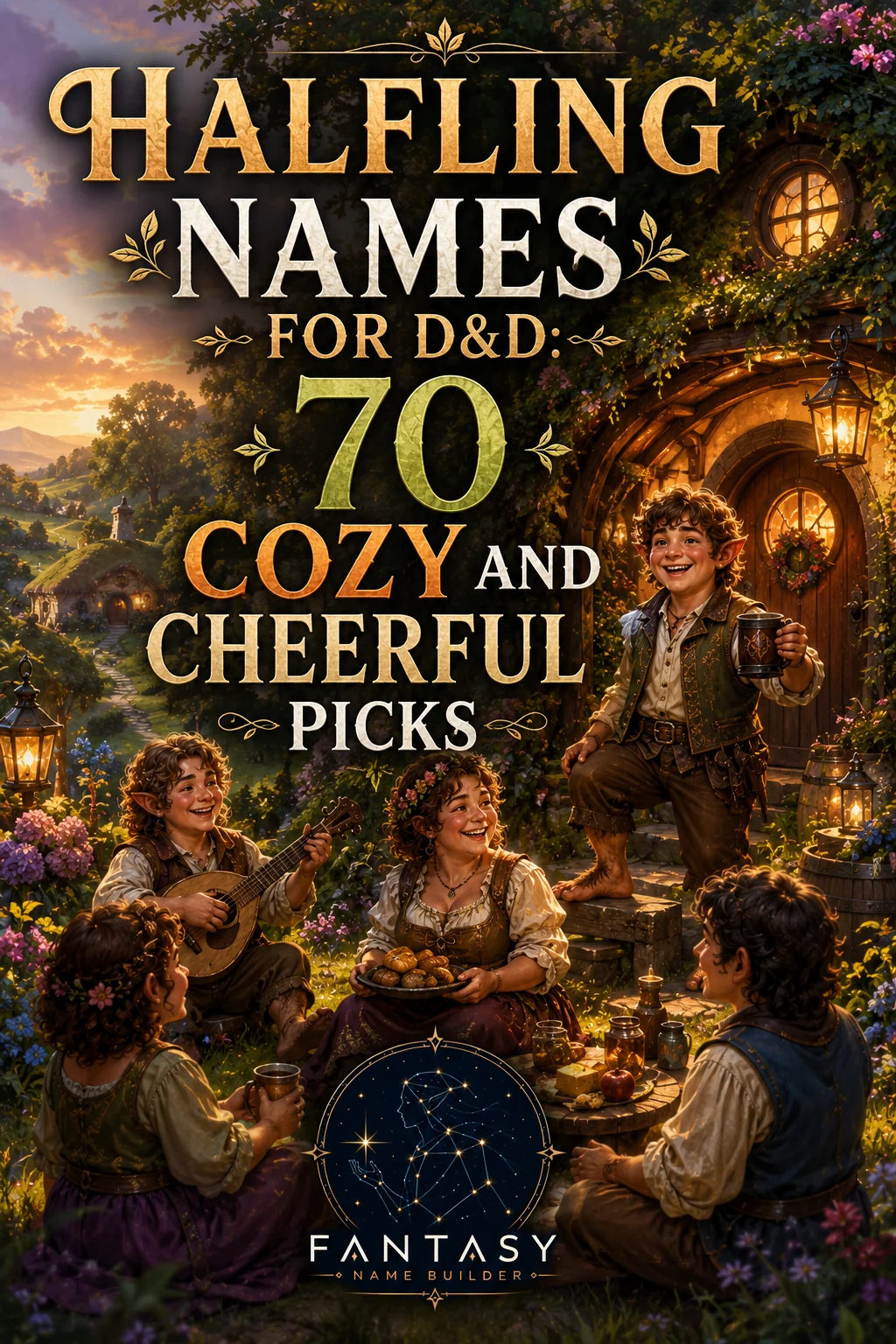
Halflings are small, cheerful folk who love food, family and adventure. They're one of the most popular choices for young players, and their names are naturally cozy. For a bigger list, the halfling names page has hundreds more sorted by gender.
Halfling first names (any hero):
- Pip
- Rosie
- Toby
- Mo
- Ollie
- Kip
- Tess
- Benny
- Daisy
- Fig
- Hob
- Poppy
- Nell
- Sam
- Tuck
- Bea
- Wim
- Hattie
- Jolly
- Bix
Halfling last names:
- Muddlefoot
- Applecap
- Hilltumble
- Pebblepocket
- Fernbottom
- Kettle
- Honeybun
- Puddlejump
- Breadbasket
- Bramblebrook
- Shortstep
- Cobblesnug
- Teacup
- Butterhill
- Merryfield
Gnome Names for Kids
Gnomes are tiny, curious inventors and tricksters. Kids who like gadgets, magic tricks or silly voices often fall in love with gnomes. The gnome names page has a much longer list if your child wants more choices.
Gnome first names:
- Tilly
- Fizzwick
- Nubbin
- Wiggin
- Dibble
- Zippa
- Tinkit
- Bonk
- Lulu
- Snapper
- Tibbit
- Quibble
- Fennel
- Zib
- Gizzy
- Wobble
- Sprig
- Pim
- Doodle
Gnome last names:
- Sprocket
- Glimmerpot
- Twistlebolt
- Fizzlebang
- Copperkettle
- Whirligig
- Sparkcog
- Bumblewick
- Gearsworth
- Tumblebutton
- Thimblenose
- Puddlepop
- Clockwhistle
- Gadgetgrin
- Fiddlesnap
Elf Names Kids Can Actually Say
Elf names in books can get long and twisty. These keep the graceful feel with none of the spelling trouble.
- Lark
- Juno Starleaf
- Ellis
- Mira Moonbrook
- Ari
- Sela Dewdrop
- Faye
- Rowan Silverbough
- Lio
- Nessa Brightwind
- Ivy
- Cael Willowshade
- Tamsin
- Wren Swiftarrow
- Elin
- Sorrel Mistglade
- Avi
- Lumi Featherfall
Dwarf Names With Big, Simple Sounds
Dwarf names are fun to shout, which makes them great for kids who like to be loud and brave at the table.
- Bram Stoneboots
- Gus Ironmug
- Hilda Rockbeard
- Dorn
- Greta Hammerfist
- Thud
- Maggie Copperbelt
- Bolt
- Rudi Anvilbottom
- Tova
- Grum Deepdig
- Bettie Goldbraid
- Krag
- Olga Pickaxe
- Tor
- Fenna Boulderback
Human Hero Names
Human characters are a great choice for kids who want to play "themselves, but braver." These sound like heroes from a storybook.
- Dax Brightblade
- Lucy Lionheart
- Finn Fairwind
- Ada Swiftsword
- Theo Strongbow
- Mae Dawnrider
- Jack Thornshield
- Ruby Redcloak
- Leo Kingsley
- Clara Truehart
- Max Ravenhill
- Nora Stormwell
- Sam Oakshield
- Ivy Hollowbrook
Dragonborn and Big Monster-Hero Names
Some kids want to play a dragon person, and that's awesome. Keep the dragon flavor but drop the tongue twisters.
- Rax
- Ember
- Zorra
- Krinn
- Blaze
- Torra
- Vex
- Skarr
- Ash
- Drak
- Sizzle
- Rumble
Names by Personality
Sometimes a child knows who their hero is before they know what race to play. Start there.
| Your kid's hero is... | Names to try |
|---|---|
| Brave and bold | Dax Brightblade, Lucy Lionheart, Bram Stoneboots, Ada Swiftsword |
| Silly and funny | Mo Hilltumble, Wobble Fizzlebang, Doodle Puddlepop, Thud |
| Sneaky and quick | Toby Kettle, Kip Fernbottom, Zippa, Vex |
| Kind and helpful | Rosie Applecap, Sunny, Juno Starleaf, Mae Dawnrider |
| Smart and clever | Tilly Sprocket, Quibble Gearsworth, Elin, Clara Truehart |
| Magical and mysterious | Fizzwick, Lumi Featherfall, Sela Dewdrop, Ember |
| Animal lover | Nubbin, Juno Starleaf, Kip Fernbottom, Rowan Silverbough |
| Loud and strong | Gus Ironmug, Krag, Grum Deepdig, Rumble |
Class Names: Fun Titles for Young Heroes
A title after a name tells everyone what the hero does. Kids love this, and it's a sneaky way to help them remember what their class can do.
- Pip the Quick (rogue)
- Tilly the Tinkerer (artificer or wizard)
- Bram the Bold (fighter)
- Rosie the Healer (cleric)
- Juno the Wild (druid)
- Fizzwick the Fizzy (sorcerer)
- Lark the Singer (bard)
- Kip the Tracker (ranger)
- Gus the Mighty (barbarian)
- Ruby the Shield (paladin)
Pet and Companion Names
Lots of kids care more about their character's animal friend than about the character. A named pet makes the story feel real and gives shy kids something to talk through. For more, see these familiar names for magical animal sidekicks.
- Biscuit (a loyal dog)
- Pickle (a frog who rides in a pocket)
- Button (a tiny mouse)
- Hoot (a sleepy owl)
- Sprout (a baby dragon)
- Noodle (a ferret)
- Clover (a pony)
- Mossy (a turtle)
- Pudding (a fluffy cat)
- Zip (a hummingbird)
- Pebble (a rock that might be alive)
- Boots (a goat who eats everything)
Sound-Alike Names for the Youngest Players
Preschool and early-reader kids love names that bounce. Repeated sounds and rhymes are easy to remember and fun to say in a big voice. If your youngest player is four, five or six, start here.
- Tippy Toes
- Bobbin Bumble
- Mimsy Moss
- Dilly Dally
- Hoppy Hob
- Lolly Lark
- Bix Box
- Pip Pop
- Wiggles Waddle
- Zuzu Zing
- Nibby Nook
- Fuzzy Fig
- Bubba Bram
- Tock Tibble
These names are a little goofy on purpose. Very young kids often want their hero to be funny more than fierce, and a bouncy name tells everyone at the table that this character is here to have a good time. If your child wants something braver later, they can always "grow into" a bigger name as the story goes on.
Ready-Made Starter Parties
Short on time? Here are complete four-hero parties you can hand straight to the table. Each set mixes races so the heroes sound different from each other, and each name comes with a one-line idea a child can play right away.
The Applecap Adventurers (cozy and kind):
- Rosie Applecap, halfling cleric who heals with warm soup
- Kip Fernbottom, halfling ranger with a pet frog named Pickle
- Tilly Sprocket, gnome wizard who builds clockwork birds
- Gus Ironmug, dwarf fighter who protects everyone with a giant shield
The Sparkle Squad (magical and silly):
- Fizzwick Glimmerpot, gnome sorcerer whose spells always sparkle
- Lumi Featherfall, elf bard who sings to plants
- Mo Hilltumble, halfling rogue who trips into secret doors
- Ember, dragonborn paladin who breathes tiny puffs of smoke
The Stoneboots Crew (brave and loud):
- Bram Stoneboots, dwarf barbarian who yells before every charge
- Greta Hammerfist, dwarf cleric who blesses the party with a hammer bump
- Dax Brightblade, human knight who polishes his armor every morning
- Zippa, gnome rogue who unlocks anything in three seconds
The Whispering Woods Rangers (outdoorsy and curious):
- Juno Starleaf, elf druid who talks to owls
- Rowan Silverbough, elf ranger who never misses
- Nubbin, gnome who befriends every bug in the forest
- Hattie Bramblebrook, halfling scout with a basket of snacks
You can give these parties to kids as-is, or use them as a menu. A child might take Tilly Sprocket but decide she builds clockwork cats instead. That's even better, because now it's their hero.
Tips for Making Names Feel Special
Once a name is picked, a few tiny touches make it feel like it truly belongs to the child.
Add a nickname. Bram Stoneboots becomes "Boots" to his friends. Nicknames give the party something to call each other and make the group feel close.
Give the name a story. Ask, "Why is your hero called Fernbottom?" Kids come up with wonderful answers, like "because he sat in a fern when he was a baby and never got up." That one sentence is the start of a backstory.
Let the name come up in the game. Have a villager recognize the family name, or a goblin mispronounce it on purpose. Kids light up when the world reacts to who they are.
Keep it for next time. Write every hero's name in a notebook or keep the exported list from the generator. If your family plays again, kids will love seeing their old hero return, maybe a little older and braver.
How to Find Names in the Free Generator
The lists above will get most families started. If your kids want something nobody else at the table has, the Fantasy Name Generator gives you endless choices. Here are the exact settings that work best for young players.
Step 1: Choose the race. Open the race menu and pick Halfling or Gnome for the friendliest names. Dwarf works great for loud, brave kids. Elf works if you keep length on Short. If a child doesn't know what they want yet, tap Browse All Races together and let them point.
Step 2: Pick a gender, or don't. Choose Male, Female, Neutral, or Any. Any gives the biggest list, and many kids happily pick a name without caring which list it came from. If your child has a clear idea, go with it.
Step 3: Set length to Short. This matters more than any other setting for kids. Short names are easier to read, say and write. Save Long for older kids who want something grand.
Step 4: Choose the format. For the youngest players, use First only so there's just one word to learn. For kids around eight and up, Full name is more fun, since they get a first and last name that sound like a real adventurer.
Step 5: Tap Generate ✦. Read the names out loud. Kids often pick by sound, not by spelling, and hearing a name is the fastest way to know whether they like it.
Step 6: Page through with ‹ ›. Show a few pages. Let kids call out "That one!" when something makes them smile.
Step 7: Save favorites with ♡. Every name a child likes goes into the Saved list. This gives you a shortlist to choose from at the end, so nobody has to decide on the first page.
Step 8: Export the list. Tap ⬇ Export .txt to download everyone's saved names. Keep it for next time. It's also handy for the DM, who'll need names for shopkeepers, villagers and silly goblins all night.
Generator Settings by Age
| Age | Race | Length | Format | Why |
|---|---|---|---|---|
| 5–6 | Halfling or Gnome | Short | First only | One short word they can say and maybe write |
| 7–8 | Halfling, Gnome or Dwarf | Short | Full name | First and last name, still simple |
| 9–10 | Any race they like | Short | Full name | More choice, still readable |
| 11–12 | Any, including Elf or Tiefling | Short or Long | Full name | Room for cooler, longer names |
| Teens | Whatever fits the hero | Long | Full name or Surname only | They'll want style, let them have it |
These are just guides. Some six-year-olds will happily say a long elf name all night, and some twelve-year-olds want to be a gnome named Bonk. Follow the kid.
A 10-Minute Naming Plan for Family Game Night
Naming can eat half an evening if you let it. This plan gets every child from "I don't know" to a named hero in about ten minutes, with no tears and no one stuck waiting.
Minute 0–2: Ask one question. Before you show any names, ask each child: "Is your hero brave, silly, sneaky, kind, clever or magical?" One word is enough. That answer points you to a race and a list.
Minute 2–5: Show a short menu. Don't hand a child 200 names. Read out five or six from the matching list above, or pull up the generator with the right race and length and read the first page out loud. Too many choices can freeze younger kids.
Minute 5–7: Let them save two or three. Each child picks up to three favorites. Tap ♡ on them in the generator, or jot them on scrap paper. Having a small shortlist takes the pressure off picking "the perfect one."
Minute 7–8: Say it out loud. Each child says their top choice in a heroic voice: "I am Bram Stoneboots!" If they trip over it, try the next name on their list. If they grin, you've got a winner.
Minute 8–10: Write it big. Have each kid write their name on the character sheet and on a folded index card in front of them, like a name tent at a meeting. Younger kids can draw a quick picture of their hero next to it. Now everyone at the table, including the DM, can see every name at a glance.
That's it. You're ready to roll.
Name Tents and Character Sheets
The folded card trick works so well it deserves its own note. Kids forget each other's character names constantly, and grown-ups do too. A name tent with big letters fixes that. Add the character's race and one word about them, like "Halfling, brave" or "Gnome, inventor," and the card doubles as a reminder of who they're playing.
For very young players, skip the full character sheet. A name, a picture, and three simple stats (strong, quick, smart) is plenty for a first night. If you're new to running games for kids, the guide to the best resources for new D&D players points to friendly rules summaries and starter materials.
A Simple Script for the Grown-Up Running the Game
If you're the DM and you've never done this before, it helps to have words ready. Here's a short script you can read or adapt:
"Every hero needs a name. I'm going to read a few names out loud. When you hear one you like, raise your hand. You can pick up to three, and then we'll choose your favorite together. Don't worry about picking the perfect name. Heroes sometimes earn new names on their adventures, so you can change it later if you want."
That last line matters. Telling kids a name isn't forever takes away the fear of choosing wrong, and most of them pick faster once they hear it. When everyone has a name, finish with a little ceremony: "Rosie Applecap, Kip Fernbottom, Tilly Sprocket, Gus Ironmug, your adventure begins now!" Kids love hearing their names announced, and it's a great way to kick off the first scene.
When Naming Gets Tricky: Quick Fixes
Kids are creative, and sometimes that creativity takes the naming step in unexpected directions. Here's how to handle the most common moments with a smile.
| What happens | Why it happens | Easy fix |
|---|---|---|
| Two kids want the same name | Siblings love the same things | Make them twins or cousins: Pip and Pippa Muddlefoot |
| A child picks a bathroom-humor name | They want a laugh | Offer a funny-but-fine swap like Puddlepop or Wobble |
| A child wants a famous movie or game hero | It's who they love right now | Help them build a twist, like a new hero with the same vibe |
| A child can't decide at all | Too many choices | Narrow to three names and let them roll a die to pick |
| The name is too hard to say | They picked by looks, not sound | Keep it as a full title and give them a short nickname |
| A child wants to change their name mid-game | They thought of something cooler | Let them, or make the new name a nickname the party gave them |
| A shy child won't pick | Pressure to choose in front of others | Let them whisper it to you, or choose later in the game |
| Every hero sounds the same | Everyone picked the same race | Suggest one halfling, one gnome, one dwarf, one elf |
Handling Silly Names Without Shutting Kids Down
Silly names will happen. A kid who names their gnome Sir Burps-a-Lot is having fun, and fun is the point of family game night. If the name is fine for your household, roll with it. The table will laugh, and the story will remember him fondly.
If the name crosses a line, don't just say no. Offer two or three funny alternatives that keep the joke alive: Sir Bubbles, Captain Fizzlebang, Wobble the Magnificent. Kids usually want the laugh, not the specific word, so a good swap often works better than a rule.
When a Child Wants a Famous Character's Name
Plenty of kids want to be their favorite hero from a book, show or game. That's a sign they're excited, which is great. Try this: "That hero is awesome. What if your character is their little cousin, or trained with them?" Then help them pick a new name with the same feel. Kids get the connection they want, and the story stays yours.
Easy Names for the People and Monsters Kids Meet
Kids remember the characters they meet, so the DM's names matter too. Long, serious names for every shopkeeper slow things down. Keep the world's names just as easy as the heroes'. The bigger D&D character names list has plenty of options, but these will cover a whole first adventure.
Friendly villagers and shopkeepers:
- Old Barley, the baker
- Mistress Plum, the potion seller
- Gaffer Moss, the farmer with lost sheep
- Hetty Bucket, the innkeeper
- Mayor Thistle, who worries about everything
- Willa Inkwell, the mapmaker
- Brother Tolly, the gentle priest
- Nan Flapjack, who knows every rumor
Silly goblins and troublemakers:
- Snig
- Grub
- Nibbles
- Big Toe
- Snort
- Lumpy
- Wedge
- Skitter
Bigger villains (still not too scary):
- The Gloom Witch
- Grumblesnout the Troll
- Captain Rattlebones
- The Mud King
- Lady Frostwhistle
- Old Gnasher, the swamp beast
Places to visit:
- Puddleton Village
- Thistle Hill
- The Whispering Woods
- Goblin Gulch
- Mossy Bridge
- The Sparkle Caves
- Old Mill Tower
Giving villains a title (The Mud King) instead of a long name helps kids track them, and it makes the big moment more dramatic when you finally announce, "The Mud King rises from the swamp!"
Mixed Ages, Siblings and Grown-Ups at the Table
Family game night often mixes a five-year-old, a twelve-year-old and two adults at one table. Names can help everyone feel like part of the same party.
Give the party a shared theme. One easy approach is a family name for the whole group: the Applecap Adventurers or the Stoneboots Crew. Each player picks a first name, and everyone shares the last name. Siblings especially like being "family" in the game, too.
Let older kids help younger ones. Ask the oldest child to read names aloud from the generator for a younger sibling. It gives the older kid a job and keeps the younger one from feeling rushed.
Grown-ups, keep it simple too. If the adults pick long, complex names, kids notice and feel their names are "babyish." Pick something short and fun yourself. A grown-up playing Gus Ironmug sends the message that simple names are the cool ones.
Match names to reading levels. If a child is still learning to read, choose names with letters they already know. A name they can read is a name they'll own.
Respect a kid's choice. If a child picks a name that seems plain to you, like Bob the Fighter, it's still their hero. Some of the best family stories start with the simplest names.
| Table setup | Naming idea | Example party |
|---|---|---|
| Parents and two young kids | Shared family surname | Rosie, Kip, Gus and Mae Applecap |
| Cousins of different ages | One race each, short first names | Pip (halfling), Tilly (gnome), Bram (dwarf), Lark (elf) |
| One-shot birthday party | Names with titles for quick roles | Ruby the Shield, Fizzwick the Fizzy, Kip the Tracker |
| Grandparents joining in | Gentle, storybook names | Old Barley joins as a friendly guide |
| Older kids running the game | Kids name NPCs from the generator | The DM picks from the exported list |
Your Next Step
Before your next family game night, open the free Fantasy Name Generator, choose Halfling or Gnome, set Short and First only, and read a page of names out loud with your kids. Let everyone save a favorite or two with ♡, export the list, and bring it to the table. Ten minutes later, your brand-new adventurers will be ready for their first quest.
Frequently Asked Questions
What are good D&D character names for kids?
Good names for kids are short, cheerful and spelled the way they sound, like Pip Muddlefoot, Tilly Sprocket, Bram Stoneboots or Juno Starleaf. Halfling and gnome names are especially kid-friendly because they're playful and simple. Let the child say the name out loud before they commit.
What race is easiest for a kid's first D&D character?
Halflings and gnomes are popular picks because they're small, brave and full of personality, and their names are easy. Humans are great too, since kids can play a braver version of themselves. Let your child choose whatever excites them most.
How do I help my child pick a name quickly?
Ask one question first, like "Is your hero brave, silly or magical?" Then show five or six names that fit, not a giant list. Let them save two or three and say each one out loud, and the right one usually jumps out.
Should kids use a first and last name?
Younger kids often do best with a single first name they can say and write. Kids around eight and up usually love a full name with a fun last name like Fernbottom or Sprocket. Follow your child's comfort level.
What if two siblings want the same name?
Make them twins, cousins or best friends with matching names, like Pip and Pippa Muddlefoot. Kids usually love the idea of being family in the game too. It turns a squabble into a story.
What if my child picks a silly or rude name?
If it's fine for your household, let them have fun with it. If it isn't, offer a few funny swaps that keep the joke, like Sir Bubbles or Wobble the Magnificent. Kids usually want the laugh more than the exact word.
Can kids use the generator by themselves?
Older kids can usually handle it on their own, since it's just a few menus and a Generate button. Younger kids do best with a grown-up reading names aloud. Either way, the ♡ button makes it easy to save favorites.
Can a kid change their character's name later?
Sure. It's their hero and their game. You can treat the new name as a nickname the party gave them, which makes the change part of the story.